
For online businesses, making payments easy is key. Using a trusted platform like PayPal can help. It’s known for being safe and easy to use. Additionally, integrate PayPal payment on website to boost trust and make buying easier. This guide will show you how to set up PayPal payments on your website. It’s all about making shopping smooth for your customers.
Key Takeaways
- Understand the benefits of using PayPal for online transactions.
- Learn how to set up a PayPal business account.
- Discover the different PayPal payment solutions available.
- Find out how to integrate PayPal into your existing website.
- Explore tips for a smooth checkout experience with PayPal.
Understanding PayPal as a Payment Solution
For any business wanting to grow online, knowing PayPal is key. It’s a well-known online payment system. It lets people and businesses send and get money online safely. Moreover, many merchants look to integrate PayPal payment on website to improve their user experience from the start.
What is PayPal?
PayPal is a digital payment system for online transactions. It started in December 1998. Now, it’s a top choice for online payments worldwide, supporting many currencies.
PayPal makes online buying and selling safe. It keeps users’ payment info safe. This way, people can pay without sharing their financial details with sellers. In addition, businesses that integrate PayPal payment on website benefit from a simple checkout process trusted by users worldwide.
Benefits of Using PayPal

PayPal offers many benefits. It’s a secure way to pay and get paid. It fights fraud with strong security.
A PayPal report shows it handles over 936 million transactions daily. This proves its reliability and trust.
“PayPal has been a game-changer for our business, allowing us to accept payments from customers worldwide with ease.”
As a result, many brands choose to integrate PayPal payment on website to unlock global transactions with ease. Other perks include being easy to use. It lets you get payments from anywhere. Plus, it works with many online stores.
Who Should Use PayPal?

PayPal is for many users. It’s great for sending money to loved ones. It’s also good for small and big businesses to get more payment options.
- Individuals: For personal transactions, such as sending money to friends or family.
- Small Businesses: To accept payments online and manage their finances efficiently.
- Large Enterprises: For complex payment needs, including multi-currency support and advanced security features.
Consequently, regardless of size, any business can integrate PayPal payment on website to scale its digital infrastructure.
Setting Up Your PayPal Account to Integrate PayPal Payment on Website
To start accepting online payments, you need a PayPal account. This process is easy and safe. PayPal is a trusted payment method that can boost your website’s sales.
Creating Your PayPal Account
First, create a PayPal account for a secure payment gateway. Go to the PayPal website and click “Sign Up.” You’ll need to enter your email, password, and some business or personal details.

Make sure your information is correct. This helps PayPal verify your account. After filling it out, PayPal will send you a confirmation email to activate your account. Then, you’re one step closer to being able to integrate PayPal payment on website for your customers.
Verifying Your Account
Verifying your PayPal account is key for security and to accept payments freely. You’ll need to link a bank or credit card to PayPal. As a result, this confirms your identity and shows you’re a real business or person.
PayPal’s verification keeps you and your customers safe from fraud. It shows you’re serious about secure transactions, which builds trust with your customers. Therefore, it’s a critical step before you integrate PayPal payment on website for safe and seamless transactions.
Understanding PayPal Business Account
A PayPal Business account has extra features for better transaction management. It lets you accept payments, track your money, and manage your finances all in one place.
Key benefits include custom payment pages, detailed reports, and easy integration with e-commerce sites. Therefore, this makes payment processing smoother and gives you insights into your business’s finances.
Choosing the Right Method to Integrate PayPal Payment on Website
There are many ways to integrate PayPal into your website. It’s important to pick the right one for your online business. For instance, PayPal offers different methods like PayPal Checkout, PayPal Standard, API integration, and plugins for e-commerce platforms. Each has its own advantages and disadvantages.
PayPal’s Checkout Solution vs. PayPal Standard
PayPal Checkout and PayPal Standard are two main options for adding PayPal to your site. PayPal’s Checkout Solution gives a modern payment experience. It lets customers pay with PayPal or cards without leaving your site. PayPal Standard, on the other hand, sends customers to PayPal’s site to pay.
Here’s a comparison of the two:
| Feature | PayPal Checkout | PayPal Standard |
|---|---|---|
| Payment Experience | On-site payment | Redirects to PayPal |
| Payment Options | PayPal, credit/debit cards | PayPal |
| Customization | Highly customizable | Limited customization |
PayPal API Integration
PayPal API integration is great for businesses wanting a custom payment solution. It lets developers add PayPal’s payment features directly into their site or app. Thus, this gives a unique payment experience.
API integration has cool features like:
- Custom payment flows
- Advanced security measures
- Integration with other business systems
PayPal Plugins for E-commerce
For e-commerce sites like WooCommerce, Magento, and Shopify, PayPal has plugins. These plugins make adding PayPal payments easy. They often come with extra features like custom payment buttons and transaction management. Furthermore, they offer one of the fastest ways to integrate PayPal payment on website without complex coding.
When picking a plugin, think about these things:
- Compatibility with your e-commerce platform
- Features and customization options
- User reviews and support
Installing PayPal to Integrate PayPal Payment on Website
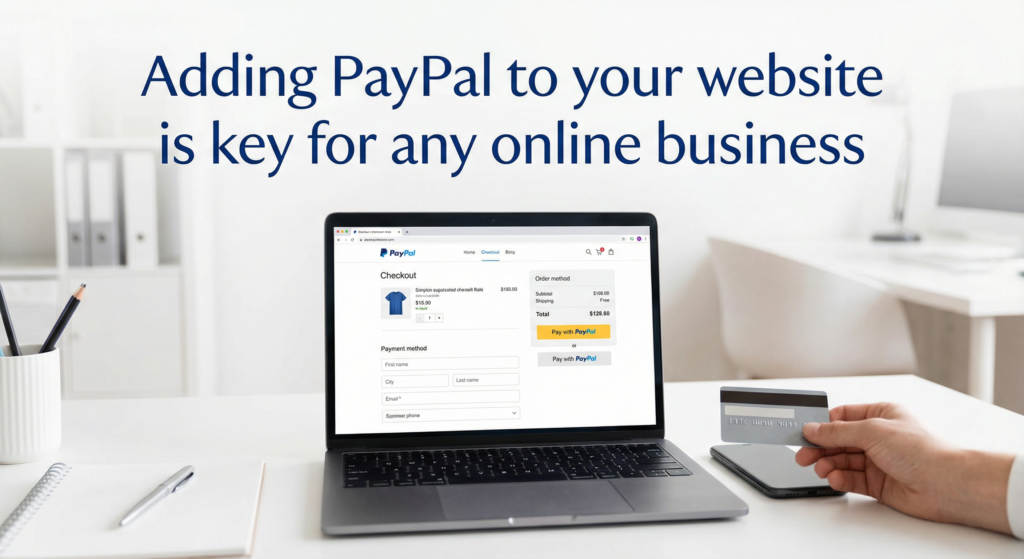
Adding PayPal to your website is key for any online business. It makes payments easy and secure for your customers. This can boost your sales and make customers happier.
Step-by-Step Guide for HTML Sites
If your site is built with HTML, adding PayPal is simple. First, log in to your PayPal account. Then, go to the “PayPal Buttons” section to make a payment button that fits your site.
After making your button, PayPal will give you a code. Copy this code and add it to your website’s HTML where you want the button. This is easy and only needs basic HTML knowledge.
- Log in to your PayPal account.
- Navigate to the “PayPal Buttons” section.
- Create a new button or use an existing one.
- Copy the provided code snippet.
- Paste the code into your website’s HTML.
Integrating with WordPress
For WordPress users, adding PayPal is even easier. There are many plugins to help. The official PayPal plugin for WooCommerce is a top pick for e-commerce sites.
To add PayPal to WordPress with WooCommerce, follow these steps:
- Install and activate the WooCommerce plugin.
- Navigate to the WooCommerce settings and select the “Payments” tab.
- Choose PayPal as your payment method and connect your PayPal account.
- Set up your payment options as you like.
Additionally, WordPress users can integrate PayPal payment on website within minutes using official or third-party plugins.
E-commerce Platforms Overview
Other e-commerce platforms like Shopify, Magento, and BigCommerce also support PayPal. Each has its own tools or features for easy integration.
For example, Shopify lets you add PayPal as a payment option from your payment settings. Magento users can find the PayPal module in their dashboard.
It’s important to check out the options for your platform. Choose the one that works best for your business. This ensures a smooth payment process for your customers.
Configuring Payment Options
To accept online payments securely, setting up your PayPal payment options correctly is essential. This involves configuring various settings to ensure a smooth transaction process for your customers. Moreover, how you configure payment settings depends on how you integrate PayPal payment on website for maximum engagement.
Setting Up Payment Preferences
Setting up your payment preferences allows you to tailor the checkout experience to your business needs. This includes deciding which payment methods to accept, such as credit cards, debit cards, or PayPal balance.
“The key to a successful online business is providing a seamless payment experience,” says Jane Doe, e-commerce expert. “By configuring your payment preferences, you can reduce cart abandonment rates and increase customer satisfaction.”
- Decide on the payment methods to accept.
- Set up payment buttons that align with your brand.
- Configure payment notifications for timely updates.
Currency and Language Settings
Configuring your currency and language settings is key for businesses in multiple regions. For example, PayPal lets you accept payments in various currencies and display your checkout page in different languages.
For instance, if your business caters to a global audience, you might want to enable multiple currencies and languages to facilitate international transactions.
| Currency | Language | Region |
|---|---|---|
| USD | English | United States |
| EUR | French, German, Spanish | Europe |
Managing Transaction Settings
Managing your transaction settings effectively is vital for maintaining a secure and efficient payment process. This includes, such as, setting up payment notifications, handling pending payments, and understanding transaction fees.
As PayPal’s security features are robust, businesses can trust that their transactions are protected. “With PayPal, you can focus on growing your business while we handle the security aspects of your transactions,” notes a PayPal security expert.
To manage transaction settings, follow these steps:
- Log in to your PayPal account.
- Navigate to your payment settings.
- Adjust your transaction settings as needed.
Customizing the PayPal Experience
Customizing your PayPal payment experience is key for a strong brand and customer trust. A personalized payment process boosts customer satisfaction and loyalty. As a result, it makes shopping more cohesive and trustworthy, leading to more repeat business and positive reviews.
Branding Your PayPal Payment Page
Branding your PayPal payment page keeps your brand’s identity strong. Use your logo and colors to make the checkout seamless. This builds trust and shows your professionalism. Similarly, when you integrate PayPal payment on website, customized branding helps reinforce your identity.
To brand your PayPal page, go to your account settings. Look for “Payment Page” or “Checkout” options. Upload your logo there. Make sure it fits PayPal’s size and file type rules.
Adding Special Features
Adding special features like gift wrapping or donation options can make shopping better. For instance, these features let customers personalize their purchases or support a cause. This can increase satisfaction and loyalty.
To add these features, use PayPal’s extra options or third-party plugins. Make sure to clearly show these options during checkout. This helps customers understand and choose what they want.
Setting Up Subscription Payments
Subscription payments are great for businesses with recurring services or products. They offer a steady income and encourage customer loyalty. This can also lower cart abandonment rates.
To start subscription payments with PayPal, create a billing agreement or plan in your account. Define the payment schedule and amount. PayPal has tools and APIs to help manage subscriptions, tailoring the experience to your business. Accordingly, many subscription-based services prefer to integrate PayPal payment on website for reliable recurring billing.
Testing After You Integrate PayPal Payment on Website
Testing your PayPal integration is key to finding and fixing problems before they hit your customers. It’s important for keeping your customers happy and your business’s good name.
Performing Test Transactions
To test PayPal integration well, you must do test transactions. This means trying out different payment situations to see if your system works right. First, make test accounts for both the buyer and seller.
Then, use these accounts to try out payments. Make sure the payment goes smoothly and the details are right. It’s also good to test payments that don’t go through and refunds.
| Test Scenario | Expected Outcome | Actual Outcome |
|---|---|---|
| Successful Payment | Payment processed correctly | |
| Declined Payment | Payment declined message | |
| Refund | Refund processed correctly |
Common Issues and Troubleshooting
When testing, you might run into problems like wrong API keys or settings not right. First, check your API keys and make sure your settings match PayPal’s guide.
If you have trouble with compatibility, talk to a developer or look at PayPal’s forums. Also, PayPal’s documentation and support can help a lot with fixing problems.
Finalizing Your Payment Setup
After testing and fixing problems, you’re ready to make your payment setup live. Then, switch from test mode to live mode in your PayPal setup. Make sure you’re using live API keys and ready for real payments.
Before going live, check that your payment page shows PayPal correctly and payments work smoothly. Also, make sure your payment page works well on mobile devices for everyone’s ease.
By testing your PayPal setup well and fixing any problems, you’ll have a reliable payment system. This will make your customers happy and improve their experience on your site.
Ensuring Security and Compliance
A secure online payment gateway is key for businesses. PayPal provides strong solutions. This setup keeps your site and PayPal safe from threats.
Understanding SSL and Security Certificates
SSL (Secure Sockets Layer) certificates are vital for encrypting data. They keep sensitive info, like credit card numbers, safe. Experts say, “An SSL certificate is a must for any e-commerce site.”
To get an SSL certificate, buy one from a trusted Certificate Authority (CA). Then, install it on your server. PayPal also uses HTTPS, making data transfer secure.
PCI Compliance: What You Need to Know
The Payment Card Industry Data Security Standard (PCI DSS) ensures credit card info is safe. PCI compliance is key to protect customer data and avoid breaches.
- Check your PCI compliance status often.
- Use strong access controls and security.
- Keep an eye on and test your security systems.
PayPal makes it easier for merchants to meet PCI DSS. It handles sensitive customer info securely.
Setting Up Fraud Protection
Fraud protection is essential to avoid losses from fake transactions. PayPal offers tools and services to fight fraud, including:
- PayPal’s Seller Protection program for eligible transactions.
- Advanced fraud detection using machine learning.
These tools help merchants lower their fraud risk. A happy merchant says, “PayPal’s fraud protection has changed our business. It’s given us peace of mind and saved us from big losses.”
Optimizing for Mobile Users
Most online shoppers use mobile devices. Therefore, making sure your PayPal payment solution works well on mobile is key. A smooth mobile payment experience boosts customer happiness and sales.
Responsive Design for PayPal Buttons
Responsive PayPal buttons are essential for a good user experience. They should adjust to fit different screens and devices. This makes it easy for mobile users to buy things.
Here are some tips for responsive PayPal buttons:
- Use PayPal’s customizable button generator to create buttons that match your website’s design.
- Ensure the buttons are large enough to be easily clicked on mobile devices.
- Test the buttons on different devices to ensure they are responsive and functional.
Best Practices for Mobile Transactions
Optimizing for mobile transactions is more than just responsive design. It’s about making the whole process smooth for users. For this reason, when you integrate PayPal payment on website, optimizing for mobile ensures maximum conversion rates.
Some best practices include:
- Streamlining the checkout process to minimize steps and reduce friction.
- Using mobile-friendly payment flows that are optimized for smaller screens.
- Ensuring that your website and payment process are secure to build trust with your customers.
| Best Practice | Description | Benefit |
|---|---|---|
| Streamlined Checkout | Reduce the number of steps in the checkout process. | Less friction, higher conversion rates. |
| Mobile-Friendly Payment Flows | Optimize payment processes for smaller screens. | Improved user experience, reduced cart abandonment. |
| Enhanced Security | Implement robust security measures to protect transactions. | Increased customer trust, reduced risk of fraud. |
Test Your Mobile Integration
Testing your mobile integration is key to ensure it works well on different devices and platforms.
Some steps to test your mobile integration include:
- Simulate various mobile devices and browsers to test compatibility.
- Conduct user testing to identify any usability issues.
- Monitor analytics to identify areas for improvement.
By following these steps and best practices, you can make sure your mobile payment experience is smooth and efficient. This will help improve your e-commerce payment solutions.
Promoting Your PayPal Payment Option
To boost customer confidence and sales, it’s key to promote your PayPal payment option well. Show PayPal on your website and use social media to increase trust and possibly boost sales.
Highlighting PayPal on Your Website
Putting PayPal front and center on your website reassures customers about your checkout’s security. You can do this by:
- Adding the PayPal logo to your payment options section.
- Using trust badges that show PayPal’s protection policies.
- Clearly stating that PayPal is available as a payment method during checkout.
By showing PayPal, businesses can tap into its secure transaction reputation. This boosts customer confidence.
Using Social Media to Promote
Social media is a big chance to promote your PayPal option to more people. You can:
- Share posts about PayPal’s benefits.
- Use PayPal’s marketing materials and campaigns.
- Chat with customers to clear up any PayPal concerns.
Additionally, you can drive more traffic when you mention that you integrate PayPal payment on website in promotional posts. Good social media use promotes PayPal and boosts your brand’s visibility and trust.
Increasing Customer Trust
Building customer trust is key to turning browsers into buyers. Some ways to do this include:
| Strategy | Description | Benefit |
|---|---|---|
| Display Trust Badges | Show PayPal’s security and protection policies. | Boosts payment security confidence. |
| Customer Testimonials | Share feedback on positive PayPal experiences. | Increases credibility and trust. |
| Clear Payment Information | Give clear, simple payment process info. | Reduces checkout anxiety, boosts trust. |
By using these strategies, businesses can promote PayPal well. This increases trust and drives sales.
Monitoring Transactions and Feedback
Keeping an eye on transactions and listening to customer feedback are important steps. They help you spot and fix problems fast. They also make customers happier. By using what you learn from these, you can make your payment process better.
How to Track Payments
Tracking payments is key to managing your PayPal setup. Use PayPal’s tools to watch your transaction activity. You can see details, track payment status, and find any issues.
Setting up alerts for payment events is also smart. It lets you act fast if there’s a problem.
Analyzing Customer Feedback
Understanding what customers think about your PayPal setup is vital. Collect feedback through surveys, reviews, and support chats. Looking at this feedback helps you find what needs fixing. Therefore, it guides you to make your payment process better and your customers happier.
Making Adjustments Based on Data
After you’ve looked at your data and feedback, it’s time to make changes. You might need to tweak your payment flow or how you handle errors. Or maybe you need to give customers more info during checkout.
By regularly checking and using this data, you keep your payment process smooth, safe, and what customers want.
Common Questions About How to Integrate PayPal Payment on Website
As you finalize the integration of PayPal on your website, you may have some lingering questions or encounter issues that need troubleshooting. This section aims to address those concerns and provide additional resources for further assistance.
Frequently Asked Questions
Many users wonder about the fees associated with PayPal transactions. Generally, PayPal charges a small fee per transaction. This fee varies based on the type of transaction and the country you’re in. For the most current information, it’s best to check PayPal’s official website for an up-to-date fee structure.
Troubleshooting Tips
If you’re experiencing issues with your PayPal integration, start by checking your API credentials. Also, ensure that your website’s SSL certificate is up to date. For more complex issues, PayPal’s developer support can be a valuable resource. They offer guidance on integrating PayPal integration services.
Additional Support
For additional resources and help, consider visiting PayPal’s official developer portal. For example, it offers guides, troubleshooting tips, and community forums. Here, you can find solutions to common problems and learn from other developers. Using these resources can make your integration process smoother and improve your website’s functionality.
FAQ
What is PayPal, and how does it work?
PayPal is a well-known online payment system. It lets people and businesses send and get money online. You link your card or bank account to PayPal for safe transactions.
How do I integrate PayPal on my website?
First, create a PayPal account. Then, pick how you want to integrate PayPal (like PayPal Checkout). Follow the steps for your chosen method.
What are the benefits of using PayPal for my online business?
PayPal is easy to use and secure. It lets you accept payments worldwide. It also builds trust with your customers.
Can I customize the PayPal payment experience for my customers?
Yes, you can. Brand your PayPal page and add special features. You can also set up subscription payments for ongoing income.
How do I test my PayPal integration before going live?
Use PayPal’s sandbox environment for test transactions. It simulates payments without actually processing them.
What security measures should I take when integrating PayPal?
Use SSL certificates and follow PCI compliance. Also, set up fraud protection with PayPal.
How can I optimize my PayPal integration for mobile users?
Make sure PayPal buttons work well on mobile. Follow mobile transaction best practices. Test your mobile setup for a smooth user experience.
How do I promote my PayPal payment option to customers?
Highlight PayPal on your site and use social media. Increase trust in your payment process.
What should I do if I encounter issues with my PayPal integration?
Troubleshoot common problems first. Check PayPal’s documentation and support. If needed, contact PayPal’s customer support.
How can I track and analyze my PayPal transactions?
Use your PayPal account dashboard to track transactions. Analyze customer feedback to improve your payment process and customer satisfaction.
Are there any additional resources available for PayPal integration?
Yes, PayPal offers lots of documentation and support. You can also get help from e-commerce experts or web developers.
What are the fees associated with using PayPal for my business?
PayPal charges fees based on transaction type, country, and account type. Check PayPal’s website for their fee structure.
Can I use PayPal for recurring subscription payments?
Yes, PayPal supports subscription payments. It’s great for businesses with ongoing services or products.
 20
20
 25
25
 33
33