
Imagine sitting in a cozy chair, closing your eyes, and letting a warm voice tell a story. No need to strain your eyes on a bright screen while reading. This magic comes from modern voice technology that brings every syllable to life. Modern platforms like AInnate TTS combine neural voice synthesis with powerful API integration, allowing creators and developers to transform written text into natural, studio-quality audio in seconds. These systems have moved from robotic clicks to smooth, friendly narrators. Now, you can enjoy your favorite articles while driving or doing other tasks. We are entering a new era of AI text to speech software for everyone.
In this article, we explore how these benefits enhance your experience. Enjoy the magic as words become natural sound effortlessly.
Key Takeaways
- Convert written documents for natural audio instantly.
- Enhance accessibility for people with visual impairments.
- Save time by multitasking during your daily routine.
- Create professional narrations without expensive equipment.
- Choose from various voices and personalized accents for your projects.
- Improve learning outcomes through auditory processing.
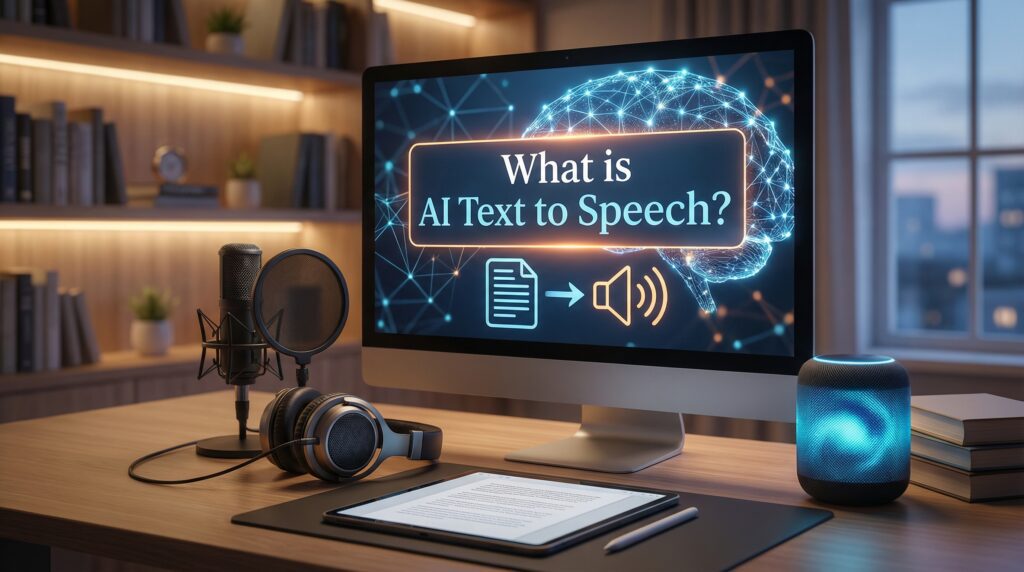
What is AI Text to Speech?
AI-powered text-to-voice systems are changing how we talk to digital content. They make voices sound real, which could change how we use digital stuff.
Understanding Intelligent Speech Generation Technology

Machine learning text to speech turns written text into spoken words. It uses natural language processing (NLP) and machine learning to make speech sound human.
This tech has a few main parts. First, NLP breaks down the text to understand it. It figures out how to say words right.
Then, machine learning makes the speech. It learns from lots of human speech to get the feel right.
The Science Behind Voice Generation
Creating natural-sounding voices is all about speech synthesis. It’s not just about saying words; it’s about the tone, pitch, and rhythm too.

Some important parts of voice generation are:
- Prosody: The rhythm and stress of speech.
- Intonation: The rise and fall of pitch when speaking.
- Emotional expression: Conveying emotions through voice.
Benefits of Automated Text-to-Speech Technology
AI-generated speech is changing how we get information. It makes things more inclusive and fun. The benefits of AI text to speech are many and help different areas.
Accessibility for All Users
Intelligent speech generation helps those with visual issues or reading problems. It turns written stuff into sound. This way, more people can hear your message.
For example, schools can use it to help students with disabilities. It makes learning better for everyone. This makes learning more fun and fair for all.
| Industry | Accessibility Benefits |
|---|---|
| Education | Enhanced learning experience for students with visual impairments |
| Customer Service | Audio assistance for customers with reading difficulties |
| Media and Entertainment | Audiobooks and podcasts for visually impaired audiences |
Enhanced User Engagement
AI text to speech makes things more interactive. It adds sound to your content. This grabs people’s attention and shares your message better.

Creators can use AI to make videos, podcasts, and audiobooks come alive. It makes their work more engaging and real.
Time-Saving Advantages
Automated text-to-speech technology saves time by automating narration. This lets you work on other parts of your project. Like writing and editing.
With AI-powered text-to-voice, you can make great audio fast. You don’t need expensive gear or voice actors. It’s quick and easy.
How AI Text to Speech Works
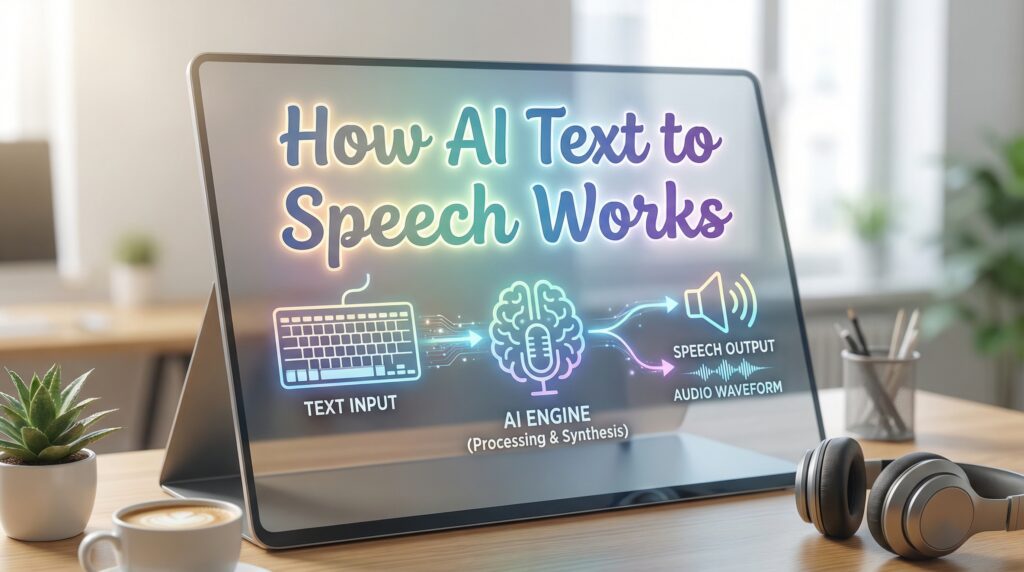
Understanding AI text to speech is key to its full use. It involves looking into its core parts and how it works.
The Role of Natural Language Processing
Natural Language Processing (NLP) is vital in AI text to speech. It lets computers understand and create human language. NLP algorithms break down the text to make speech sound natural.
The NLP process includes steps like tokenizing and analyzing parts of speech. These steps help the system grasp the text’s meaning. This leads to more accurate and natural-sounding voice synthesis.
Machine Learning in Voice Synthesis
Machine learning is key in Intelligent speech generation. It trains neural networks on huge datasets of human speech. This training helps the system create speech that sounds like a real person.
The use of machine learning has greatly improved AI speech quality. These systems can learn different speaking styles and languages. This makes them very versatile and effective.
Integrating Text to Speech APIs
To use AI text to speech in your apps, integrate Text to Speech APIs. These APIs offer customizable voices and language support. They also provide real-time speech synthesis.
When using a Text to Speech API, you can pick the voice and language that fit your app. Many APIs also offer advanced features like voice synthesis customization and speech rate adjustment.
With developer-friendly REST APIs, platforms such as AInnate TTS allow seamless integration into websites, SaaS products, mobile apps, and automation workflows.
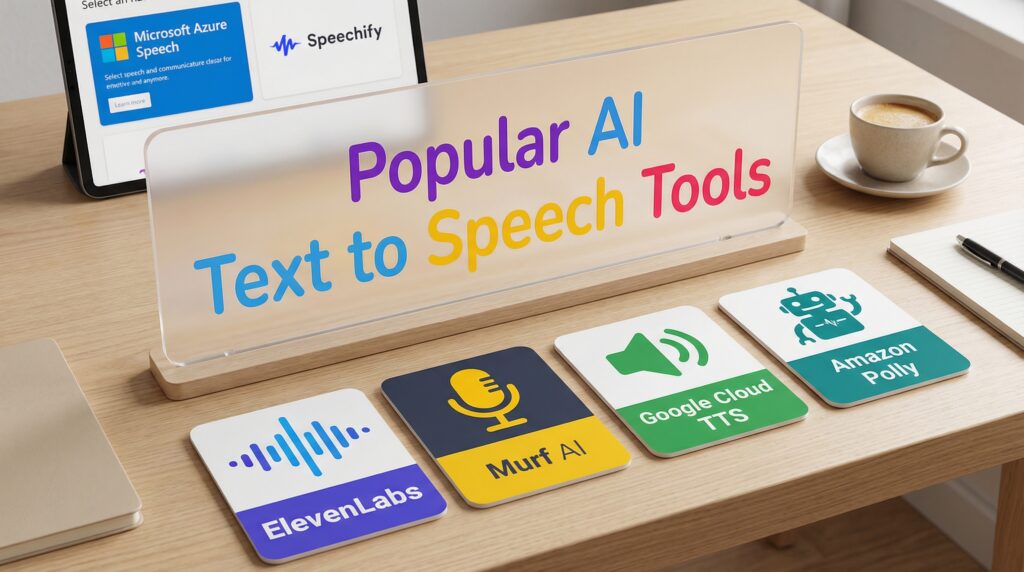
Popular AI Text to Speech Tools
Many AI text to speech tools are well-known for their features. They make technology more accessible and easy to use.
Google Cloud Text-to-Speech
Google Cloud Text-to-Speech turns text into speech that sounds natural. It uses advanced neural networks to mimic human voice. It supports many languages and voices, making it useful for different needs.
This tool is great for making high-quality audio. It’s used in voice assistants, audiobooks, and customer service bots.
AInnate TTS
A modern AI text to speech platform should offer neural voices, multilingual support, fast API integration, and scalable pricing. Solutions like AInnate TTS focus on natural voice quality, speed, and developer-friendly API access.
Amazon Polly
Amazon Polly converts text into speech that sounds real. It has many languages and voices, helping developers reach users worldwide.
It’s easy to use and works well with other Amazon Web Services (AWS). It’s a top pick for adding voice features to apps.
Microsoft Azure Speech Service
Microsoft Azure Speech Service offers speech-to-text and text-to-speech. It has custom voice models for businesses to match their brand.
This service is scalable and supports real-time speech translation. It’s perfect for complex speech needs.
When picking an AI text to speech tool, think about speech quality, language support, and integration ease. The right tool can improve user experience and open new app possibilities.
Applications of Machine Learning Text to Speech
AI generated speech is changing how we use technology. It’s used in many ways, from education to customer service. This shows how versatile and useful this technology is.
E-Learning and Education
In schools, AI-driven voice output makes learning better. It turns textbooks into audiobooks or creates audio lessons. This helps students who are blind or prefer listening over reading.
- Personalized learning experiences through customized audio content
- Enhanced accessibility for students with disabilities
- Improved engagement through interactive audio lessons
Content Creation and Marketing
Content makers and marketers use Automated text-to-speech technology for audio content. They make engaging audio for videos, podcasts, or ads. This saves time and is cheaper than hiring voice actors.
Some key benefits include:
- Rapid production of audio content
- Consistency in voice and tone across different content pieces
- The ability to reach a wider audience through multiple language support
Customer Service Automation
In customer service, Intelligent speech generation automates phone systems. It provides support 24/7. This makes customer service better and more personal.
The advantages of using AI-powered text-to-voice in customer service include:
- Reduced operational costs through automation
- Improved customer satisfaction through quick and accurate responses
- Enhanced scalability to handle a large volume of customer inquiries
Choosing the Right AI-powered Text-to-Voice Solution
Finding the right AI text to speech solution takes careful thought. You must match your needs with what different solutions offer.
Consider Your Use Case
What you plan to use the AI text to speech for is key. Are you making things easier for people who can’t see, or automating customer service? Each use has its own needs and requirements.
For example, online learning might need voices that sound real and can handle tricky words. Customer service apps might focus on fast responses and working well with CRM systems.
Key Features to Look For
When looking at AI voice synthesis options, focus on a few important things. Look at the voice quality, the languages and dialects it supports, and how much you can customize it.
- Voice Quality: Choose solutions with voices that sound natural.
- Language Support: Make sure it has the languages and dialects you need.
- Customization: See if you can change things like pitch, speed, and tone to match your brand.
Experts say, “The voice quality can really affect how users feel and what they think of the experience.”
“The human voice is the most natural form of communication, and AI text to speech technology is getting closer to replicating it.”
Pricing Models and Trials
It’s important to understand how different AI-powered text-to-voice solutions charge. Some charge by the character, while others have subscriptions or different pricing levels.
Try out free trials or demos to see how the solution works with your specific needs. This lets you check the audio quality and how easy it is to use with your systems.
| Pricing Model | Description | Suitability |
|---|---|---|
| Pay-per-character | Charges based on the number of characters processed. | Ideal for applications with variable or low-volume usage. |
| Subscription-based | Offers a fixed amount of usage for a recurring fee. | Suitable for applications with consistent, high-volume usage. |
Enhancing the User Experience
AI text to speech makes interactions more personal and engaging. It offers features tailored to improve your experience. This makes digital content more accessible and fun.
Customization Options for Voices
AI-powered text-to-voice lets you customize voices to your liking. You can pick from different voices and adjust their pitch, tone, and speed. This creates a more natural and engaging listening experience.
For example, use a young voice for educational apps or a mature voice for professional services. This customization helps match the audio to your brand and audience’s needs.
| Customization Option | Description | Benefits |
|---|---|---|
| Voice Selection | Choose from a range of voices | Enhances user engagement |
| Pitch Adjustment td> | Adjust the pitch to suit the context | Improves listening experience |
| Speed Control | Control the speed of the narration | Increases comprehension |
Multiple Language Support
Intelligent speech generation supports many languages, great for global businesses. It lets you provide content in your audience’s native language. This boosts their experience.
This is super useful for companies in multilingual markets. It helps you serve a diverse customer base and grow globally.
User Feedback and Adaptation
AI text to speech adapts based on user feedback. It analyzes how users interact to improve the output. This ensures the technology gets better over time.
By adjusting to user feedback, you can make the experience more personal. You can tweak voice tone and language style to suit your audience better.
The Future of AI Text to Speech
The future of Intelligent speech generation is exciting. It will change how we use technology. You’ll hear more natural-sounding voices as it gets better.
Trends to Watch in Technology
Several trends will shape Automated text-to-speech technology. One is better natural language processing (NLP). This means AI will understand human language better and speak more accurately.
Another trend is combining Machine learning text to speech with augmented reality (AR) and virtual reality (VR). This will make experiences more immersive. You’ll see more apps that use these technologies together.
Impact on Industries
AI-driven voice output will change many industries. In education, it can make learning more accessible and fun for students.
In customer service, it can help automate support. This means customers can get help anytime, improving their satisfaction.
Ethical Considerations
As AI text to speech gets better, we must think about ethics. There’s a risk of misuse, like creating deepfakes or spreading false information.
To fix this, we need strong rules and guidelines. It’s also important to know the risks and benefits of this technology.
Common Challenges
AI text to speech technology is groundbreaking but faces several challenges. Knowing these challenges is key to using it well.
Limitations of Current Technology
Today’s Automated text-to-speech technology systems struggle to mimic human speech fully. They find it hard to match emotional expression and contextual understanding that humans take for granted.
AI systems have trouble capturing the subtleties of human emotions and tone. Human speech is full of emotional cues that AI algorithms find hard to get right.
Addressing Audio Quality Concerns
Audio quality is a big issue for Automated text-to-speech technology. Things like sample rate, bitrate, and voice synthesis quality affect how good it sounds.
To improve audio quality, developers use better algorithms and high-quality voice recordings. They aim for high sample rates and bitrates for clear, sharp sound.
Understanding User Preferences
It’s important to know what users like when it comes to AI voice synthesis. People have different tastes in voice characteristics, like pitch, tone, and pace.
To meet these varied tastes, many AI-driven voice output tools let users customize. This way, users can adjust the voice to their liking or needs.
Best Practices
When you start using Machine learning text to speech in your apps, follow the best practices. This will help you get natural-sounding audio and make sure it works on all platforms. Good integration makes your app better and helps it stand out.
Creating Natural-Sounding Audio
Making the voice sound natural is a big challenge. To do this, you should:
- Choose a top-notch AI text to speech engine with lots of voices and languages.
- Adjust settings like pitch, rate, and volume to fit your app’s needs.
- Use SSML (Speech Synthesis Markup Language) to add details like pauses and emphasis.
By tweaking these settings, you can make the audio more human and engaging for your users.
Ensuring Compatibility with Platforms
To make sure your AI voice synthesis works on all platforms, remember:
- Test your app on different devices and systems to find any problems.
- Use APIs and SDKs from the text to speech service to make integration easier.
- Make your audio files work well in different situations, like different internet speeds and audio setups.
Being compatible makes users happier and lets more people use your app.
Testing and Iteration
Testing is key in the integration process. It includes:
- Getting feedback from users to see how they like the AI text to speech.
- Doing technical tests to find and fix bugs or issues.
- Improving your design and code based on what you learn.
Keep testing and improving your AI text to speech feature. This makes it better and more fun for users.
Conclusion:
AI text to speech is changing how we use digital content. It makes things easier to use, more accessible, and faster to create. This tech is set to change many industries.
Shaping the Future
The future of Machine learning text to speech looks bright. We’ll see better voice technology, more use in different fields, and new ideas. You can lead this change by using Automated text-to-speech technology in your work.
Take Action
It’s time to start using AI-driven voice output. It can make your brand better, help with learning, or just make things easier for users. Look at tools like Google Cloud Text-to-Speech, AInnate TTS, Amazon Polly, and Microsoft Azure Speech Service to find what you need.
If you’re looking for a scalable AI text to speech solution with natural voices and simple API integration, explore AInnate TTS and start converting text into audio today.
Innovative Applications
Think about how you can use AI-powered text-to-voice. It can be for audiobooks, podcasts, or even voice assistants. By using Intelligent speech generation, you can find new ways to do things and stay ahead in your field.
FAQ
What exactly is AI text to speech and how can it benefit your projects?
AI voice synthesis turns written text into speech that sounds like a real person. It uses advanced technology to make voices sound natural. This technology makes digital content more accessible and engaging. It also saves time on voiceover production.
How does natural language processing improve the quality of AI generated speech?
Natural language processing (NLP) is key. It helps the software understand the text’s meaning and emotions. This way, the speech sounds natural and relatable, unlike a robot.
Which industry-leading tools should you consider for professional voice synthesis?
Google Cloud Text-to-Speech offers many voices thanks to DeepMind’s research. Amazon Polly is great for making text sound like real speech. Microsoft Azure Speech Service is perfect for complex projects and customer service.
Can you integrate AI-powered text-to-voice into your own website or mobile app?
Yes! Top providers offer APIs for easy integration. This lets you add real-time audio conversion without building the models yourself.
How does machine learning help in creating more realistic voice technology?
Machine learning analyzes huge amounts of human speech. It learns the patterns of real speech, making voices sound more natural and expressive.
What are the best practices for ensuring your AI generated audio sounds natural?
Start with high-quality text. Use clear punctuation and adjust settings like speed and pitch. Always test and refine to match your audience.
Are there any challenges or limitations you should be aware of when using text-to-speech software?
Current limits include rare words or names being mispronounced. Quality across languages can also be a challenge. Always check the output and stay updated on user preferences.
What does the future hold for the evolution of voice synthesis?
The future looks bright for AI voice synthesis. We’ll see more personalized and emotionally aware voices. It will be used in many areas, but ethics will become more important.