

Understanding your online presence is key in today’s digital world. You might ask, “How can I make my site more visible and attractive to my target audience?” Therefore, the answer lies in understanding your site’s performance by examining the visitors it gets. This is where website traffic analysis becomes essential. By looking at who visits your site, you learn about their behavior, likes, and who they are. This info helps you improve your content and marketing strategies, making your site more appealing to your audience. To do this well, you need to use different tools and metrics to track and understand your site’s visitor data through effective website traffic analysis.
Key Takeaways
- Understanding your site’s visitor demographics is key for making your content better.
- Looking at how visitors behave helps you find ways to improve.
- Choosing the right tools is vital for analyzing visitor data effectively.
- Insights from analysis can greatly improve your online marketing.
- Regular analysis helps you keep up with changes in visitor behavior and preferences.
What is Website Traffic Analysis?
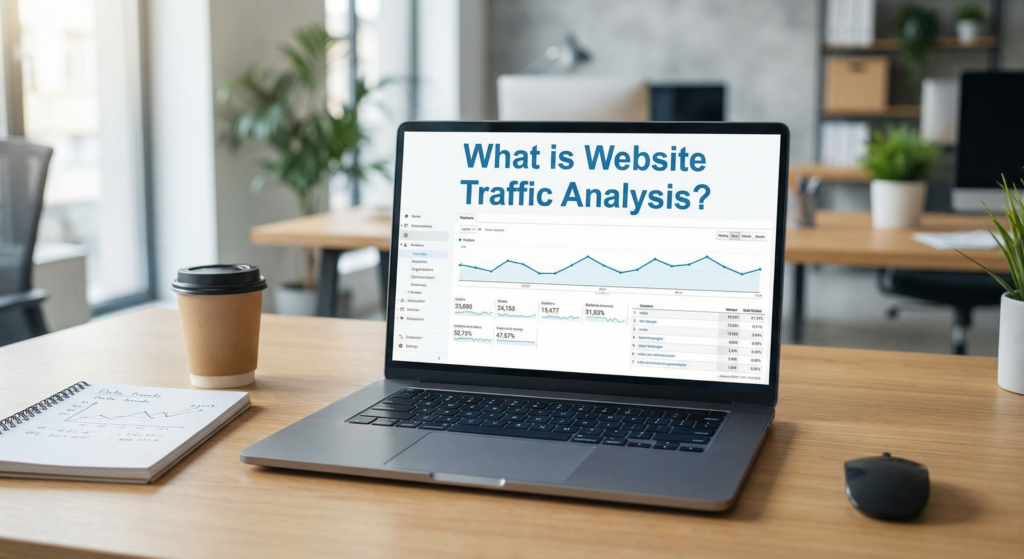
To unlock your website’s full power, you must understand website traffic analysis. This process looks at visitor data to help you make better decisions online.
Definition and Importance
Website traffic analysis is studying how visitors act on your site. It looks at how they find your site, what they do there, and where they go next. This is key because it shows how well your site works and where you can get better.

This analysis is very important. It lets you tweak your marketing, make your site better for users, and get more results. It’s a basic part of digital marketing that helps all kinds of businesses do better online.
Key Metrics to Consider
When you look at your website traffic, there are important metrics to watch. These include:
- Page Views: The total number of pages viewed on your website. This shows which content your visitors like most.
- Unique Visitors: The number of different people visiting your site in a certain time. This tells you how many people see your site.
- Bounce Rate: The percentage of visitors who leave without doing anything else. A high bounce rate might mean your content or site isn’t engaging enough.
- Average Session Duration: The average time visitors spend on your site. This shows how interesting your content is.
By looking at these metrics and others, you can learn more about your audience. This helps you make smart choices to improve your site. Using website analytics tools makes this easier, giving you the info you need to succeed online.
Types of Website Traffic
Users can find your website in many ways, affecting your marketing and site performance. Knowing these channels helps improve your online presence and meet your website’s goals.
Organic Traffic

Organic traffic comes from search engine results without ads. It’s when users click on your site because it matches their search. This is called organic search traffic.
To boost organic traffic, use SEO best practices. Optimize your content with the right keywords, make your site fast, and mobile-friendly.
Paid Traffic
Paid traffic comes from ads you pay for, like Google Ads or social media ads. It’s great for quick site traffic, like when you launch something new.
- Target specific groups to reach the right people.
- Use catchy ads to get more clicks.
- Keep an eye on your ad performance to improve it.
Direct Traffic
Direct traffic is when users type your URL or use bookmarks. It shows your brand is well-known and trusted.
To increase direct traffic, build a strong brand. Encourage users to bookmark your site or remember your URL.

Referral Traffic
Referral traffic comes from links on other sites. It’s a sign of a good backlink profile and boosts your site’s credibility.
- Write guest posts to get quality backlinks.
- Collaborate with others in your field to get your content shared.
- Make your content easy to share and valuable to others.
Understanding and tracking different website traffic types helps improve your marketing. It also boosts your site’s performance and drives more conversions. Good website traffic monitoring leads to better online presence and success.
Tools for Effective Website Traffic Analysis
The right tools can help you analyze your website traffic and uncover valuable insights about your audience. To make informed decisions and optimize your online strategy, you need access to reliable and comprehensive website analytics tools.

Google Analytics
Google Analytics is one of the most powerful and widely used website analytics tools available. It provides detailed insights into your website’s traffic, including the number of visitors, their demographics, and behavior on your site. With Google Analytics, you can track your website’s performance, set goals, and monitor your progress over time.
SEMrush
SEMrush is an all-in-one digital marketing tool that includes website traffic analysis features. It offers competitor analysis, keyword research, and technical SEO audits, making it a comprehensive solution for understanding your website’s traffic and improving your online presence.
Ahrefs
Ahrefs is another robust tool for analyzing website traffic and improving your SEO strategy. It provides insights into your website’s backlinks, keyword rankings, and content performance. With Ahrefs, you can identify areas for improvement and optimize your content to attract more visitors.
Hotjar
Hotjar is a user behavior analytics tool that complements traditional website traffic analysis by providing visual insights into how visitors interact with your site. It features heatmaps, session recordings, and conversion funnel tracking, allowing you to see what users click on, how far they scroll, and where they drop off.
With Hotjar, you can uncover usability issues and improve user experience by making data-driven design and content decisions.
Other Useful Tools
In addition to Google Analytics, SEMrush, and Ahrefs, there are several other website analytics tools that can provide valuable insights into your website’s traffic. These include:
- Moz: Offers SEO audits, keyword research, and link building insights.
- Clicky: Provides real-time website analytics and heatmaps to understand user behavior.
- Hotjar: Offers heatmaps, session recordings, and conversion funnel analysis to help you understand user interactions.
| Tool | Key Features | Best For |
|---|---|---|
| Google Analytics | Traffic analysis, goal setting, demographic insights | Understanding overall website performance |
| SEMrush | Competitor analysis, keyword research, SEO audits | Comprehensive digital marketing strategies |
| Ahrefs | Backlink analysis, keyword rankings, content performance | SEO optimization and content improvement |
| Hotjar | Heatmaps, session recordings, conversion funnel tracking | Improving user experience and behavior analysis |
By leveraging these website analytics tools, you can gain a deeper understanding of your website’s traffic and make data-driven decisions to improve your online presence. Whether you’re looking to optimize your SEO strategy, understand your audience better, or track your website’s performance, there’s a tool available to help you achieve your goals.
Understanding Your Audience
To boost website traffic, knowing your audience well is key. By analyzing your site’s traffic, you can learn a lot about your visitors. You’ll find out who they are, what they want, and how they use your site.
Demographics Analysis
Demographics analysis is vital for understanding your audience. It looks at things like age, gender, location, and language. This helps create a detailed picture of who visits your site.
With demographic data, you can spot trends and patterns. This knowledge guides your content and marketing plans. For example, if many visitors are from a certain area, you can make your content more appealing to them.
Behavior Insights
Knowing how your audience acts on your site is as important as knowing who they are. Behavior insights show you which pages are hits, how long people stay, and where they leave.
This info is gold for making your site better and keeping visitors interested. If people leave at a certain page, you can tweak it to keep them around longer.
User Interests
Figuring out what your audience likes can help you create better content. This way, you can meet their needs and keep them engaged.
Tools like Google Analytics can help you understand what your audience is interested in. Then, you can adjust your content to match their interests.
Setting Up Your Website Traffic Analysis
Effective website traffic monitoring starts with a well-configured analysis setup. To understand your website’s performance and identify opportunities to increase website traffic, you need to establish a robust traffic analysis framework.

Establishing Goals
Before diving into the numbers, it’s important to define what you want to achieve with your website. Are you looking to boost sales, generate leads, or simply increase your online visibility? Clear goals help you focus on the metrics that matter most.
- Identify your primary objectives
- Determine the key performance indicators (KPIs) that align with your goals
- Set specific, measurable targets for each KPI
Tracking Unique Visitors
Understanding who your visitors are is vital for tailoring your content and marketing strategies. Tracking unique visitors helps you gauge the size of your audience and analyze their behavior.
To effectively track unique visitors, consider the following:
- Use cookies and other tracking technologies to identify new vs. returning visitors
- Analyze demographic data to understand your audience better
- Monitor how different segments of your audience interact with your site
Monitoring Page Views
Page views are a critical metric for understanding how users interact with your website. By monitoring page views, you can identify which content resonates with your audience and which areas need improvement.
Key aspects to consider when monitoring page views include:
- Tracking the most viewed pages to understand popular content
- Analyzing the bounce rate to identify pages with high drop-off rates
- Using heatmaps and session recordings to understand user behavior
By establishing clear goals, tracking unique visitors, and monitoring page views, you can set up a detailed traffic analysis. Therefore, this analysis informs your strategy to increase website traffic. Regularly reviewing and adjusting your approach based on these insights will help you optimize your website’s performance over time.
Interpreting Traffic Data
Learn to unlock your website’s full power by understanding your traffic data. It’s key to making smart choices for your site and marketing. By digging into your data, you can find ways to make your site better, improve user experience, and attract more visitors.
What Do Your Numbers Mean?
First, figure out what your traffic numbers tell you. Your reports show how people find and use your site. For example, a high bounce rate might mean your content isn’t what visitors want. But, a long average session time could mean your content is really engaging.
Look at page views, unique visitors, and session length. These numbers help you see how users act and where you can get better.
Identifying Trends and Patterns
Spotting trends and patterns in your data helps you stay ahead. Regularly check your reports to see changes in user behavior. You might notice seasonal changes, shifts in who visits, or new ways people find your site.
For instance, you might see that some pages get more hits at certain times. This info can guide your content and marketing plans.
Creating Visual Reports
Visual reports are great for sharing your findings. Charts, graphs, and heat maps make complex data simple to grasp.
When making reports, keep it clear and simple. Use tools like Google Data Studio or Tableau for interactive reports. This way, you can share your data in a way that helps everyone make better decisions and boost your site’s traffic.
Improving Website Traffic
To boost your website’s online presence, focus on strategies that increase traffic. It’s not just about more visitors; it’s about attracting the right people and keeping them engaged.
SEO Best Practices
Search Engine Optimization (SEO) is key to improving website traffic. By following SEO best practices, you can increase your site’s organic search traffic.
- Do thorough keyword research to find terms your audience uses.
- Make sure your website’s on-page elements are optimized, like meta tags and titles.
- Your site should be mobile-friendly and load quickly.
- Create content that’s valuable and engaging for your users.
“The best SEO is a combination of good content, user experience, and technical execution.”
Content Marketing Strategies
Content marketing is also essential for boosting website traffic. By creating and sharing valuable content, you can attract and keep a specific audience.
- Plan your content with a calendar to stay organized.
- Use different content formats like blog posts, videos, and infographics.
- Repurpose your content to reach more people.
- Interact with your audience through comments and social media.
| Content Type | Description | Benefits |
|---|---|---|
| Blog Posts | In-depth articles on specific topics. | Improves SEO, establishes authority. |
| Videos | Visual content that can be informative or entertaining. | Engages audience, increases sharing. |
| Infographics | Visual representations of information. | Easy to consume, highly shareable. |
Utilizing Social Media
Social media platforms are great for driving traffic to your website. By using social media well, you can reach more people and direct them to your site.
- Share your content on different social media platforms.
- Interact with your followers by responding to comments and messages.
- Use paid social media ads to reach more people.
- Keep track of your performance with social media analytics tools.
By using SEO, content marketing, and social media, you can greatly improve your website traffic. This will also boost your online visibility.
Common Mistakes in Website Traffic Analysis
When you start analyzing website traffic, knowing common mistakes is important. Many businesses and website owners make errors that can mislead them about their site’s performance.
Ignoring Quality over Quantity
Just looking at how many website traffic visitors you have is not enough. You also need to check the quality of your traffic. Look at bounce rate, time on site, and pages per session. For example, a high bounce rate might mean your content isn’t what your audience wants.
| Metric | Description | Importance |
|---|---|---|
| Page Views | Total number of pages viewed | Indicates overall traffic |
| Unique Visitors | Number of distinct visitors | Shows the reach of your content |
| Bounce Rate | Percentage of visitors who leave immediately | Indicates content relevance |
| Time on Site | Average time spent on the site | Reflects engagement level |
Failing to Set KPIs
Key Performance Indicators (KPIs) are key to measuring your website’s success. Without clear KPIs, consequently, it’s hard to know if your website traffic is helping you achieve your goals. Good KPIs include conversion rates, lead generation, and sales.
Misunderstanding Data Interpretation
Understanding your data is a big part of website traffic analysis. Getting your data wrong can lead to wrong conclusions about your site’s performance. It’s important to know the context of your data and use it to guide your decisions.
By avoiding these common mistakes, you can make sure your website traffic analysis is accurate and useful. This will help you make better decisions to improve your website and reach your online goals.
Case Studies: Success Stories in Website Traffic Analysis
Case studies show us how to boost website traffic. They share real examples of how sites have increased their visitors. This helps us learn from their successes.
E-commerce Success
E-commerce sites have greatly improved their traffic. For example, an online store boosted its visitors by 30%. They did this by:
- Improving product descriptions and images
- Making the site easier to navigate
- Running targeted marketing campaigns
These steps helped the store increase website traffic and sell more.
Blog Growth Examples
Blogs have also seen big gains from traffic analysis. A well-known blog increased its visitors by 50%. They did this by:
- Optimizing post titles and meta descriptions
- Creating engaging content
- Sharing content on social media
These actions led to significant growth and a more active audience.
Service Website Transformations
Service-based websites have also seen improvements. A service provider boosted its traffic by 25%. They did this by:
- Doing thorough keyword research
- Optimizing content for those keywords
- Improving the site’s technical SEO
These steps helped the service provider get more visibility online and attract more clients.
These examples show the impact of website traffic analysis. By learning from these successes, you can boost your site’s traffic and reach your online goals.
Conclusion: Elevate Your Website Traffic Strategy
Understanding your website traffic is key to knowing your audience and improving your online presence. By using the tips from this article, you can boost your website traffic and get more conversions.
Key Takeaways
It’s important to know the different types of website traffic. Use tools like Google Analytics and SEMrush to get insights. Also, focus on quality over quantity and set clear goals to make smart decisions.
Implementing Change
To increase website traffic, follow SEO best practices and create a strong content marketing plan. Also, connect with your audience on social media. Keep checking and tweaking your strategy based on your analysis to stay on track.
Staying Ahead
Keep up with the latest trends and algorithm changes to stay competitive. Always watch your traffic data to find ways to improve. This will help you keep your website traffic strategy strong.
FAQ
What is website traffic analysis, and why is it important?
Website traffic analysis is about collecting and analyzing data on your website visitors. It’s key for understanding your audience and improving your site. It also helps drive more traffic to your site.
What are the key metrics to consider when analyzing website traffic?
Important metrics include page views, unique visitors, and bounce rate. Also, average session duration and conversion rates are vital. These metrics show how well your site is doing and where you can get better.
What are the different types of website traffic?
There are several types of website traffic. These are organic, paid, direct, and referral traffic. Knowing these types helps you create better marketing plans and improve your site.
How can I analyze my website traffic effectively?
Use tools like Google Analytics, SEMrush, and Ahrefs to analyze your traffic. These tools give you detailed insights into your site’s performance. They help you understand your audience and track your progress.
What are some common mistakes to avoid in website traffic analysis?
Avoid ignoring the quality of your traffic, not setting KPIs, and misinterpreting data. Knowing these mistakes helps ensure your analysis is accurate and useful.
How can I improve my website traffic?
Improve your traffic by using SEO, creating quality content, and using social media. Also, try other digital marketing strategies. This increases your site’s visibility and attracts more visitors.
What is the role of demographics analysis in understanding my audience?
Demographics analysis reveals your audience’s age, location, and interests. This information helps you tailor your content and marketing to meet their needs.
How can I track and monitor my website traffic metrics?
Use website analytics tools like Google Analytics to track your metrics. These tools provide real-time data and insights. They help you make informed decisions.
What are some effective ways to increase organic search traffic?
To boost organic search traffic, focus on SEO. Optimize your content, meta tags, and internal linking. Also, create content that’s relevant to your keywords.
How can I stay informed about changes in my website traffic?
Regularly check your analytics, set up alerts for big changes, and keep up with digital marketing trends. This helps you adapt to changes and make informed decisions.
 20
20
 25
25
 33
33