
In today’s digital world, keeping your website safe is essential. It’s not just a nice-to-have; it’s a must. An SSL certificate is key to making your site a secure place for visitors. It encrypts data between your site and users’ browsers. Getting an SSL certificate does more than just protect data. It also makes your site more trustworthy and helps it show up better in search results. With the best free SSL activation, you can keep your online presence safe without spending a lot. This article will show you how to secure your site with a reliable SSL certificate.
Key Takeaways
- Understand the importance of an SSL certificate for your website’s security.
- Learn how to activate a free SSL certificate for your site.
- Discover how an SSL certificate can improve your search engine visibility.
- Find out why securing your website is key for building trust with your audience.
- Get a step-by-step guide on implementing SSL activation.
What is SSL and Why is it Important?
Online threats keep growing, making SSL’s role in website security key. SSL, or Secure Sockets Layer, creates a safe link between your site and visitors.
Understanding SSL Certificates
An SSL certificate proves your site’s identity and makes a secure connection. It keeps data between your site and users safe and unchanged.

To get one, a certificate authority checks your site’s identity. Then, they give you a certificate to put on your server. Additionally, the Best Free SSL Activation helps confirm your website’s identity through domain validation.
Benefits of SSL for Websites
SSL certificates bring many advantages, like:
- Stronger security with HTTPS encryption
- Safe for sensitive user data
- More trust from your site’s visitors
- Better rankings in search engines, thanks to Google’s HTTPS preference
In fact, the Best Free SSL Activation boosts user trust by visibly displaying HTTPS in the browser.
Risks of Not Using SSL
Without an SSL certificate, your site faces dangers like data breaches and lost trust. Without HTTPS encryption, hackers can grab sensitive info like passwords and credit card numbers.

Also, Google’s “Not Secure” warnings can scare off visitors. This hurts your site’s reputation and traffic. As a result, choosing the Best Free SSL Activation can help protect your site from threats and improve user confidence.
How Free SSL Activation Works
With the rise of online threats, it’s key to know how to activate free SSL. Free SSL activation secures your website by encrypting data between your site and visitors. This protects sensitive info and boosts your site’s trust.
Moreover, the Best Free SSL Activation ensures encrypted data transfer across your site without added costs.
What Free SSL Services Offer
Free SSL services give basic encryption for your website. They ensure data between your site and users is safe. These services offer:
- Domain Validation (DV) certificates, which verify you own the domain.
- Basic encryption, protecting against data interception.
- HTTPS support, now a standard for secure browsing.
Limitations of Free SSL Certificates
Free SSL certificates are a good start but have limits:

- Limited validation: They usually only offer domain validation.
- Shorter validity periods: Often, they need to be renewed every 90 days.
- Limited support: Less support compared to paid certificates.
Even so, the Best Free SSL Activation is sufficient for most small to medium-sized websites.
The Process of Activating Free SSL
Activating free SSL involves several steps:
- Choose a free SSL provider like Let’s Encrypt or Cloudflare.
- Generate a Certificate Signing Request (CSR) on your server.
- Verify your domain ownership through the provider’s method.
- Install the SSL certificate on your server.
- Configure your site to use HTTPS.
Top Providers for Best Free SSL Activation
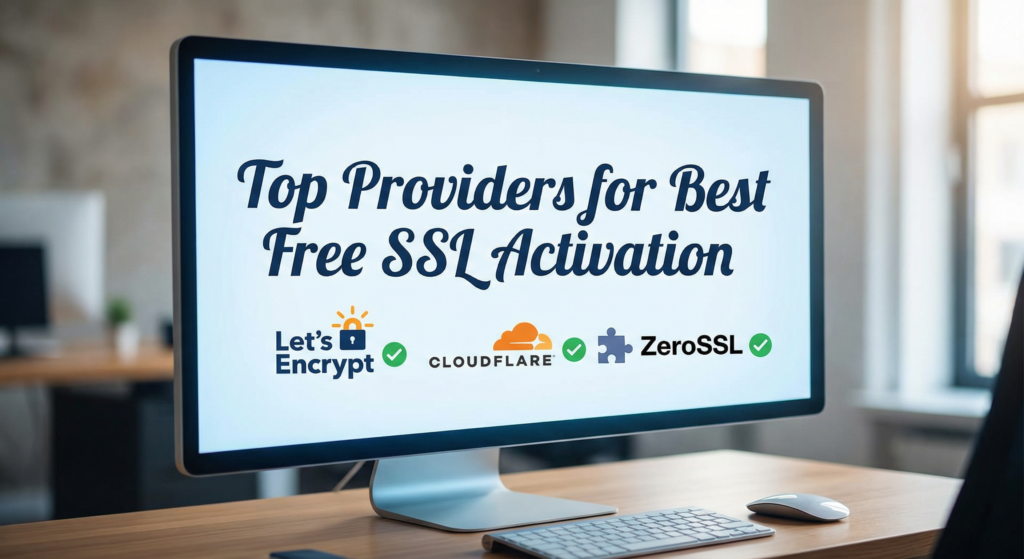
Several top providers offer the best free SSL activation for your website. It’s important to choose the right SSL provider for your website’s security and trust. We’ll look at three leading providers: Let’s Encrypt, Cloudflare, and SSL for Free.
Let’s Encrypt
Let’s Encrypt is a popular choice for free SSL certificates. It’s a non-profit that gives free SSL/TLS certificates for encrypted connections. Let’s Encrypt is widely adopted due to its ease of use and the fact that it’s free. Getting a certificate is automated, making it easy for website admins.
For example, Let’s Encrypt provides the Best Free SSL Activation through a streamlined, automated process.
One of the key benefits of Let’s Encrypt is its wide compatibility with various platforms and browsers. But, certificates are only valid for 90 days, needing regular renewal. This can be managed through automated processes, but it does require some technical setup.
Cloudflare
Cloudflare is another prominent provider that offers free SSL activation. It acts as a reverse proxy, providing security features like SSL encryption. Cloudflare’s free plan includes flexible SSL options, allowing you to choose different levels of SSL validation.
Using Cloudflare for SSL is easy and provides additional security features, like DDoS protection and CDN services. But, while Cloudflare offers free SSL, some advanced features require a paid plan.
SSL for Free
SSL for Free is a straightforward service that provides free SSL certificates. It uses Let’s Encrypt as its certificate authority, ensuring trusted certificates. The service simplifies the process of obtaining and renewing SSL certificates, making it accessible even to those without extensive technical knowledge.
SSL for Free offers a simple interface for managing certificates and supports multiple domain validations. But, similar to Let’s Encrypt, the certificates are valid for 90 days, requiring periodic renewal.
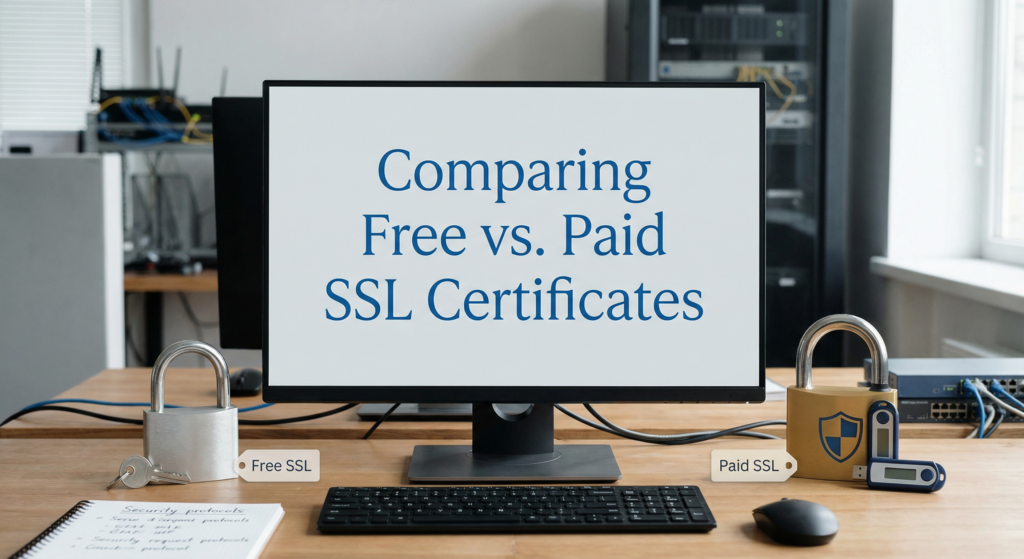
Comparing Free vs. Paid SSL Certificates
Choosing between a free and paid SSL certificate is a big decision for your website’s security. It’s not just about the cost. You need to think about the security level, features, and support each option provides.
Security expert says, “Security is not just about the technology; it’s about the trust you build with your users.” The type of SSL certificate you pick plays a big role in building that trust.
Cost Considerations
Free SSL certificates don’t cost anything, but they might not have all the features. They often have a shorter validity period. Paid SSL certificates cost money but offer more features and last longer.
For example, Let’s Encrypt gives free SSL certificates that last 90 days and need to be renewed often. Paid certificates from DigiCert can last up to 2 years, depending on the vendor.
“The best part about Let’s Encrypt is that it’s free, automated, and open.”
Features to Look For
When comparing SSL certificates, look at several key features. These include the validation level, encryption type, and extra features like wildcard or multi-domain support.
- Domain Validation (DV) checks that the certificate applicant owns the domain.
- Organization Validation (OV) includes verification of the organization’s identity.
- Extended Validation (EV) involves a more rigorous verification process, often displaying the organization’s name in the browser.
Paid SSL certificates usually have more advanced features, like EV. Free certificates might only offer DV.
Level of Support
The support you get from the certificate authority is also important. Paid SSL certificates often have better support, including phone and email help. This can be very helpful if you run into problems.
For example, GlobalSign provides 24/7 support for its paid SSL certificates. This means help is always available when you need it.
| Feature | Free SSL | Paid SSL |
|---|---|---|
| Validation Level | DV | DV, OV, EV |
| Validity Period | Typically 90 days | Up to 2 years |
| Support | Limited | 24/7 |
In conclusion, while free SSL certificates are a good start, paid SSL certificates offer more. They have longer validity periods and better support. Your choice should match your website’s needs and the trust you want to build with your users.
Step-by-Step Guide to Activate Free SSL
In today’s world, getting free SSL is key to protect your website and users. With more cyber threats, having a secure site is essential. This guide will help you activate free SSL easily, keeping your online space safe.
Choosing a Provider
First, pick a reliable SSL provider. Options like Let’s Encrypt, Cloudflare, and SSL for Free are popular. Look at ease of use, support, and if it works with your hosting.
Let’s Encrypt is simple and supports many platforms. Cloudflare has more than SSL security. SSL for Free makes getting and installing certificates easy.
| Provider | Ease of Use | Customer Support |
|---|---|---|
| Let’s Encrypt | High | Community-driven |
| Cloudflare | High | 24/7 Support |
| SSL for Free | Medium | Email Support |
Installation Process
After picking a provider, install the SSL certificate. The steps change based on your hosting and the certificate type.
Most providers need you to create a CSR, send it to them, and then install the certificate on your server.
- Generate a CSR on your server.
- Submit the CSR to your chosen SSL provider.
- Download and install the SSL certificate.
- Configure your server to use the new certificate.
Verifying SSL Activation
After installing, check if your SSL is working. Look for “https” and a padlock in your URL.
SSL Labs’ SSL Test can check your SSL setup for any problems.
“The best way to ensure your SSL certificate is installed correctly is to test it with a reputable SSL testing tool.” –
Common Challenges When Activating Free SSL
Free SSL certificates are a great way to secure your website without spending a lot. But, you might face some issues when you try to activate them. Knowing what these problems are and how to fix them can make the switch to HTTPS easier.
Troubleshooting Certificate Errors
When you install a free SSL certificate, you might run into errors. These can happen if the certificate is not set up right or if there’s a problem with the certificate chain. Sometimes, the certificate might even be expired.
- Make sure the certificate is installed correctly and matches your domain.
- Double-check the certificate chain to make sure it’s set up right.
- Make sure the certificate is valid and not going to expire soon.
As the Let’s Encrypt documentation points out, “A common issue is the incorrect installation of the intermediate certificate.” Getting all the necessary certificates installed can fix many of these errors.
Dealing with Expiration Issues
Free SSL certificates usually last for 90 days. It’s important to keep track of when they need to be renewed to avoid any service interruptions.
- Set reminders for when the certificate needs to be renewed.
- Use tools like Certbot to automate the renewal process if you can.
- After renewing, make sure the new certificate is installed correctly.
Automating renewals can really help avoid problems caused by expired certificates.
Resolving Mixed Content Warnings
Mixed content warnings happen when your website uses both HTTP and HTTPS. To fix this, make sure all content is loaded over HTTPS.
- Change all URLs in your content to use HTTPS.
- Look for and update any HTTP URLs in your website’s code.
- Use tools like Why No Padlock to find any mixed content issues.
“Mixed content can undermine the security benefits of SSL. Ensuring all content is served over HTTPS is key.” –
Maintaining Your Best Free SSL Activation Certificate
Getting your free SSL certificate is just the start. Keeping it up is key for ongoing security. Your site’s safety depends on managing your SSL certificate well, keeping HTTPS encryption strong.
Renewal Procedures
Renewing your free SSL certificate is vital to keep your site secure. Most free SSL services, like Let’s Encrypt, have certificates that last 90 days. To handle renewals well:
- Set reminders for renewal dates to avoid certificate expiration.
- Automate the renewal process where possible, using tools provided by your SSL service or server software.
- Verify that your SSL certificate has been renewed correctly by checking your website’s security settings or using online SSL validation tools.
By keeping up with renewal procedures, you keep HTTPS encryption going strong. This keeps your site visitors trusting you. Therefore, automating the Best Free SSL Activation renewal process is critical for uninterrupted website security.
Best Practices for SSL Management
SSL management is more than just renewals. Here are some top tips to boost your site’s security:
| Practice | Description | Benefit |
|---|---|---|
| Monitor Certificate Expiration | Regularly check the expiration dates of your SSL certificates. | Avoid security warnings and possible loss of user trust. |
| Use Strong Key Sizes | Make sure your SSL certificates have strong key sizes (e.g., 2048-bit or higher). | Boost the security of your HTTPS encryption. |
| Implement OCSP Stapling | Enable OCSP stapling to make certificate validation more efficient and secure. | Lessen server load and improve user experience. |
By following these best practices, you can greatly improve your website’s free SSL service security. This protects your users’ data and keeps their trust.
How SSL Affects SEO and User Trust
Google now puts a big emphasis on HTTPS. This makes SSL’s role in SEO and user experience even more important. When you think about making your website secure, it’s key to know how SSL affects your site’s visibility and how users see it.
Google’s Stance on HTTPS
Google has always pushed for HTTPS encryption. This is clear in how it uses search algorithms. By choosing HTTPS sites, Google wants to make browsing safer for everyone.
- HTTPS as a ranking signal: Google gives a slight ranking boost to secure sites.
- Chrome’s “Not Secure” warning: Non-HTTPS sites get a “Not Secure” label in Google Chrome, which might scare off visitors.
User Experience and Trust Factors
SSL does more than just help with SEO. It also boosts user trust and experience. When users see the padlock icon, they feel more confident in the site.
Important factors include:
- Visual cues: The padlock icon and “https” in the URL show a secure connection.
- Trust indicators: Extended Validation (EV) SSL certificates show the company name next to the padlock, making it even more trustworthy.
- Reduced bounce rates: A secure site can make users feel safer, leading to lower bounce rates.
Impact on Search Rankings
SSL’s effect on search rankings is complex. HTTPS is a confirmed ranking signal, but it’s part of a bigger SEO strategy.
Here are some points to consider:
- Competitive advantage: In competitive fields, HTTPS can set you apart and help you rank better.
- Technical SEO: Proper SSL setup is key; mistakes can hurt your SEO.
- Local SEO: For local businesses, a secure site can improve local search visibility, as local SEO and broader SEO best practices often overlap.
Understanding how SSL, SEO, and user trust work together helps you make smart choices for your website. This can improve your online presence.
Frequently Asked Questions About Best Free SSL Activation
Understanding free SSL certificates is key for your website’s security. Many questions come up when considering free SSL. We’ll answer some common ones to help you understand the process and benefits.
Is Free SSL Safe?
Free SSL safety is a big concern. But, reputable providers like Let’s Encrypt offer strong security. They have encryption and validation to protect your site’s identity. Just make sure to follow the setup and renewal steps to keep your site secure.
Can I Upgrade to Paid SSL Later?
Starting with free SSL and then needing more features? Upgrading to paid SSL is possible. Many free SSL providers also offer paid plans with extra benefits. You’ll need to get a new certificate signing request and install the paid SSL on your server.
What to Do If SSL Doesn’t Work?
SSL issues can be frustrating. Problems like mixed content warnings or certificate errors can happen. First, make sure all content is served over HTTPS. Check for any HTTP links and update them to HTTPS.
If you’re seeing certificate errors, check if your SSL is installed right and not expired. For ongoing issues, reach out to your SSL provider’s support or a web expert for help.
Final Thoughts on Best Free SSL Activation
Securing your website is now a must, not just a choice. With more cyber threats, keeping your site and user data safe is key. Free SSL activation is a big step in making your website secure and trustworthy for visitors.
Protecting Your Site’s Integrity
Free SSL activation secures your website and protects your users’ sensitive info. This is vital for keeping user trust and ensuring a safe browsing experience. A secure site is better protected against data breaches and cyber-attacks, keeping your users’ data safe.
Promoting a Safer Internet
In conclusion, the Best Free SSL Activation gives your site a strong security foundation without added expenses. More websites using SSL make the internet safer for everyone. By picking the best free SSL activation, you help this effort.
It’s a simple yet powerful way to boost your website’s security and promote online safety. Secure your site today and help make the internet safer for all.
FAQ
What is the best free SSL activation service?
Top free SSL providers include Let’s Encrypt, Cloudflare, and SSL for Free. They offer trusted SSL certificates to secure your site.
How do I activate a free SSL certificate on my website?
First, pick a provider. Then, create a certificate signing request (CSR) on your server. Next, get your SSL certificate from the provider. Lastly, install it on your server, following the provider’s guide for HTTPS encryption.
Is free SSL safe to use for my website?
Yes, free SSL is safe. It offers the same encryption as paid SSL certificates. This keeps your website’s data private and secure, trusted by most browsers.
Can I upgrade from a free SSL certificate to a paid one later?
Yes, you can switch to a paid SSL certificate if needed. Most providers make this transition easy when you’re ready.
What should I do if my free SSL certificate doesn’t work?
If your SSL certificate isn’t working, check its installation. Make sure your server and domain are set up right. If not, contact your SSL provider’s support for help with errors or mixed content warnings.
How often do I need to renew my free SSL certificate?
Renewal times for free SSL certificates vary. Some, like Let’s Encrypt, expire every 90 days. You’ll need to renew regularly to keep your site secure.
Will having an SSL certificate improve my website’s search engine ranking?
Yes, an SSL certificate can help your site’s ranking. Google prefers HTTPS sites, seeing them as more secure. This can lead to better rankings and more user trust.
How does SSL affect user trust in my website?
SSL boosts user trust by showing a padlock icon in the browser. It also encrypts sensitive info, protecting user data. This makes browsing safer.